Meet
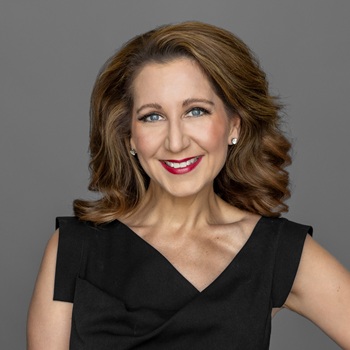
DeDe Halfhill
Former principal communications advisor to the Secretary of Defense and Chairman of the Joint Chiefs of Staff at the Pentagon
- Topics
- Communication Skills, Keynote, Leadership
- Travels from
- United States
- Speaking fee
- $17,500 – $20,000
About DeDe Halfhill

- Former principal communications advisor to the Secretary of Defense and Chairman of the Joint Chiefs of Staff at the Pentagon
- 25-year Air Force leader and advisor
- Featured on CBS’s 60 Minutes and in Brené Brown’s New York Times bestseller "Dare to Lead"
Colonel DeDe Halfhill, USAF (Ret.), spent 25 years leading and advising in some of the most consequential environments in the U.S. military.
At the Pentagon, DeDe served as principal communications advisor to the U.S. Secretary of Defense and Chairman of the Joint Chiefs of Staff, helping navigate crises from North Korean nuclear provocations to the early COVID-19 pandemic. Her crisis communication plan for North Korean threats was adopted by the National Security Staff as the official U.S. course of action.
She deployed twice to Iraq, including a year-long command tour responsible for a large-scale mission sustaining combat operations. Stateside, she led the installation that was home of the Air Force nuclear enterprise to become the #1 installation in the Air Force. She also served as communications lead for the U.S. Air Force Thunderbirds and as a Georgetown University National Defense Fellow.
Her leadership has been featured on CBS’s 60 Minutes and in Dr. Brené Brown’s New York Times bestseller Dare to Lead, where Brown describes DeDe as one of her “leadership heroes and a total badass.”
In 2014, while still serving in the Air Force, DeDe discovered the service’s first leadership manual from 1948. Written from wartime experience, it treated understanding human emotion as an operational requirement of leadership. Over the next seven years, she watched those ideas play out across command, crisis, change, and senior military leadership.
DeDe is currently writing a book inspired by that discovery, tracing what leadership once understood about the human experience, what was lost, and why that understanding matters even more in the environments leaders face today. Today, DeDe is founder and CEO of TAIOH Partners and works with organizations including Salesforce, Lockheed Martin, Bank of America, Hearst, and FEMA. She brings a rare combination of command experience, national-level crisis communication, and deep understanding of what happens to people when the stakes rise, helping leaders see more clearly, respond with greater precision, and solve the problems in front of them
Keynotes
Bring the right conversation into the room.
-
Every organization depends on people doing hard things together: speaking the truth early, contributing ideas, crossing functional boundaries, staying engaged through change, and asking for support when the load gets heavy.
Connection creates the conditions for those behaviors. When people feel seen, heard, and valued, they are more willing to say what needs to be said, contribute what they know, and stay in the work when it gets hard. That makes connection a performance capability, shaping how quickly information moves, how freely people contribute, and how well teams work together under pressure.
Drawing from more than 25 years of military leadership, including two tours in Iraq and command at the installation that was home of the Air Force nuclear enterprise, DeDe shows leaders how connection is built in the everyday moments that determine whether people speak, contribute, collaborate, and stay engaged. She gives audiences practical ways to create the trust and shared commitment that allow people to do difficult work together.
-
Senior leaders are making high‐stakes decisions in a world that does not slow down. AI is changing how work gets done. Customers are changing what they expect. The organization keeps restructuring. They are expected to move faster, keep people steady, and maintain trust and alignment while the ground keeps moving.
Forged is built for that reality. It gives leaders a practical human skill they can use in the middle of constant change. They learn how to understand what their people are carrying and how it affects decisions, and what they can do about it in clear, concrete steps.
DeDe Halfhill spent twenty‐five years in the United States Air Force, including two combat tours in Iraq and command of more than 1,800 people at the home of the Air Force nuclear enterprise. She also advised the Chairman of the Joint Chiefs of Staff at the Pentagon during periods of intense uncertainty and rapid change.
For years, she led the way most senior leaders are taught to lead: focus on discipline, strategy, and
decisions. Then she discovered the Air Force’s first leadership manual from 1948, written directly from wartime experience shaped by high loss, rapid advances in technology, and profound uncertainty. It gave language to something she had already been seeing in command: the men who wrote it treated understanding human emotion as an operational requirement of leading. They understood that what people carry shapes trust, information flow, behavior, and a leader’s ability to identify and solve the real problem. -
Your leaders know the conversations they need to have, the decisions they need to make, and the ideas they need to bring forward. The defining moment comes in the space between knowing and doing. That is where courage lives.
Between knowing and doing, people feel something. Fear. Uncertainty. Doubt. Vulnerability. What they feel shapes whether they speak, decide, contribute, challenge, or act. Everyday Courage gives leaders a practical way to recognize those moments and move through them with intention. Small acts, repeated over time, become culture.
Drawing from 25 years of military leadership, including two tours in Iraq, DeDe shows how courage is
built long before the highest-stakes moments arrive. It is practiced in ordinary moments when a leader chooses to speak, decide, ask, challenge, or act. Those moments build the capacity organizations rely on when the stakes rise. -
Women have spent decades learning what leadership is supposed to look like. Be decisive. Be
confident. Be strong. And along the way, many learned to edit capacities that did not fit the traditional picture of authority: reading the room, understanding what people are carrying, naming what is difficult, and creating the trust that allows people to do hard things together.Those capacities belong at the center of serious leadership. Leading Unapologetically gives women a different way to understand the strengths they already bring and the influence available when they use them fully.
Drawing from 25 years of leadership in the U.S. military, DeDe shares what she learned rising through an institution shaped by traditional ideas of authority and strength. During her career, she discovered the Air Force’s first leadership manual from 1948 and found something remarkable: leaders shaped by wartime experience treated understanding human emotion as an operational requirement of leading.
The very capacities that can be labeled soft were part of how the Air Force once taught leaders to
understand people and accomplish the mission. Leading fully means recognizing the value of those capacities, trusting them, and using them with intention.
Videos
DeDe Halfhill in action



Interested in DeDe Halfhill speaking at your event?
Fill out the inquiry form and we will help you through the booking process to book DeDe Halfhill for your event.
This includes us helping you throughout the entire event planning process—checking availability, confirming fee, ensuring alignment with your organization’s goals, logistics, day of activities, and so much more.
Prefer to call us? Talk to one of our talent experts:
1 (877) 882-5368